
- perfectwalkinbathtubs
How Do Walk-In Tubs Support Individuals with Limited Mobility?
Quick Answer: Walk-in tubs support individuals with limited mobility by reducing step-over height, enabling seated bathing, and integrating safety features like grab bars and anti-slip surfaces. These mechanisms improve balance, minimize fall risk, and allow safer, more independent daily bathing routines. |
Stepping into a traditional bathtub requires lifting one leg over a high edge while maintaining balance on a wet surface, which directly challenges stability, joint strength, and coordination. For individuals with limited mobility, this single movement becomes one of the most common points of household injury, especially in bathrooms where slip risk is already elevated. Walk-in tubs are designed to eliminate this exact failure point by reorganizing entry, positioning, and bathing.
Did you know? Bathroom-related falls account for a significant share of home injuries among older adults, with step-over tub entry among the highest-risk movements due to sudden shifts in body balance and reduced friction underfoot.
Instead of forcing the body to adapt to the environment, walk-in tubs adapt the environment to the user. By lowering entry thresholds, introducing seated positioning, and embedding stability features, these tubs transform bathing from a high-risk activity into a controlled, supported process.
Did you know? Studies on hydrotherapy show that warm-water immersion can improve circulation and reduce joint stiffness, making routine bathing not just safer but also physically beneficial for individuals with arthritis or muscle limitations.
This article breaks down the exact mechanisms through which walk-in tubs support mobility, explaining how each feature directly addresses a specific physical limitation and contributes to long-term safety, independence, and comfort.
What Mobility Challenges Do Traditional Bathtubs Create for Users?

Traditional bathtubs are designed for fully able-bodied movement, which creates multiple friction points for individuals with limited mobility. The combination of elevated entry height, slippery surfaces, and unsupported positioning forces users to rely heavily on balance, joint strength, and coordination—all of which may already be compromised.
Why Does Step-Over Height Increase Fall Risk?
Stepping over a standard tub wall requires lifting the leg 14–20 inches while maintaining single-leg balance on a potentially wet surface. This movement shifts the body’s center of gravity forward and upward, increasing instability. For individuals with reduced muscle strength or joint stiffness, this transition significantly raises the likelihood of losing balance during entry or exit.
Did you know? Research shows that a large portion of bathroom injuries occur during transitional movements, especially entering or exiting bathtubs, rather than during the bathing process itself.
How Do Wet Surfaces Affect Balance and Stability?
Bathrooms naturally create low-friction environments due to water, soap residue, and smooth flooring materials. When friction decreases, the body requires a faster muscular response to maintain stability. Individuals with limited mobility often have delayed reaction times or reduced strength, making slips harder to recover from once initiated.
Why Is Standing During Bathing Physically Demanding?
Standing for extended periods places a continuous load on the knees, hips, and lower back. For individuals with arthritis, muscle weakness, or post-surgical limitations, this sustained pressure leads to fatigue and instability. As fatigue increases, the ability to maintain posture declines, further elevating fall risk.
Did you know? Prolonged standing in a wet environment can increase muscle fatigue by reducing micro-adjustments in posture, which are essential for maintaining balance on slippery surfaces.
These combined factors make traditional bathtubs inherently incompatible with mobility limitations, not because of a single flaw, but due to multiple overlapping physical demands that increase risk at every stage of the bathing process.
How Does Low-Threshold Entry Improve Safe Accessibility?

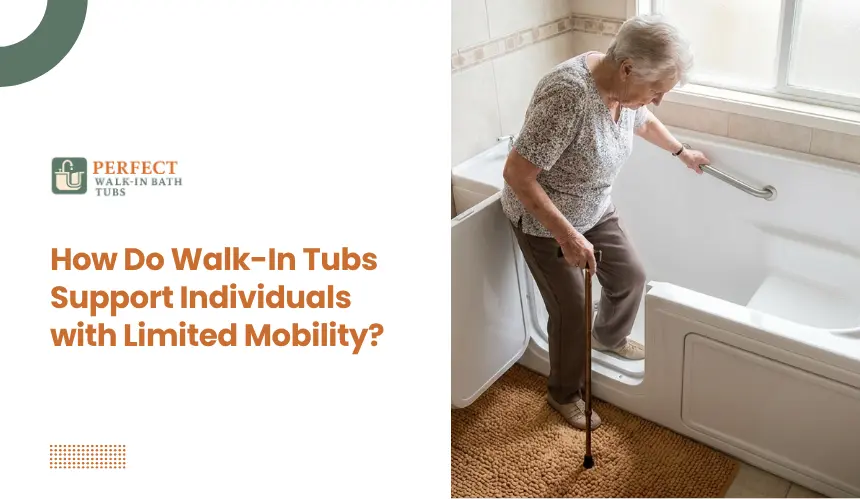
Walk-in tubs fundamentally change how users enter the bathing space by removing the need for high, unstable movements. Instead of lifting the body over a barrier, users step through a low threshold and transition into a controlled, stable position. This design directly reduces the mechanical stress on joints and minimizes disruption to balance during entry and exit.
What Is a Low Step-In Threshold and How Does It Work?
A low-threshold entry typically reduces the step-in height to just a few inches, allowing users to maintain a more natural walking motion. This minimizes the vertical lift required by the hips and knees, which is especially important for individuals with joint stiffness or reduced range of motion. By lowering this barrier, the body remains closer to its natural center of gravity throughout the movement.
Did you know? Even a small reduction in step height can significantly decrease the force required by the knee joint, lowering strain and improving overall movement control during entry.
How Does Entry Design Reduce Balance Disruption?
Traditional tub entry forces users into a single-leg stance while shifting their weight over an elevated surface. In contrast, low-threshold entry allows both feet to remain closer to the ground during the transition, reducing instability. This shorter movement range limits sudden shifts in body position, which are a common trigger for slips and falls.
Why Is Door-Sealed Access More Practical Than Climbing Over Walls?
Walk-in tubs use a watertight door system that opens outward or inward, allowing users to enter the tub space before water is introduced. This eliminates the need to climb over walls entirely. Once inside, users can sit down safely before filling the tub, eliminating the risk of entering or exiting while standing in water.
Did you know? Eliminating step-over movements can reduce bathroom-related fall risks by addressing one of the most injury-prone actions in daily routines, transitioning into and out of the tub.
By simplifying entry mechanics and stabilizing body movement, low-threshold designs transform bathing into a predictable and controlled process, significantly improving safety for individuals with limited mobility.
Why Is Built-In Seating Essential for Users with Limited Mobility?
Built-in seating is one of the most critical design elements in walk-in tubs because it eliminates the need for prolonged standing and helps stabilize the body throughout the bathing process. By shifting users from a standing to a seated position, the tub reduces physical strain, improves balance, and creates a controlled environment where movement is minimized.
How Does Sitting Reduce Load on Joints and Muscles?
When a user sits, body weight is redistributed from the lower extremities to a stable surface. This reduces compressive forces on the knees, hips, and ankles, which are often the most affected areas in individuals with mobility limitations. Sitting also minimizes the continuous muscle engagement needed to maintain posture.
Key biomechanical advantages of seated bathing:
- Reduces joint compression in weight-bearing areas
- Minimizes muscle fatigue over time
- Allows controlled, energy-efficient movement
Did you know? Sitting can reduce joint load by a significant margin compared to standing, especially in individuals with arthritis or muscle weakness, making it a safer position for extended activities like bathing.
Why Does Seated Bathing Improve Stability?
A seated position lowers the body’s center of gravity, which directly improves balance. When the center of gravity is closer to the base of support, the likelihood of tipping or slipping decreases. This is particularly important in wet environments where even minor instability can lead to falls.
Stability improvements include:
- Reduced risk of lateral (sideways) slipping
- Increased control over upper-body movements
- Less reliance on reactive balance corrections
How Does Seat Height Affect Comfort and Accessibility?
The height of the built-in seat is designed to align with the natural mechanics of sitting and standing. An ergonomically positioned seat allows users to transition between sitting and standing with minimal effort, reducing lower-body strain. Proper seat height also ensures users can maintain a comfortable posture while bathing without overextending their joints.
Accessibility benefits of optimized seat height:
- Easier sit-to-stand transitions
- Reduced need for external assistance
- Improved posture during bathing
Did you know? Ergonomic seat positioning plays a key role in reducing strain during movement transitions, which are one of the most physically demanding actions for individuals with limited mobility.
How Do Safety Features Enhance Stability and Control During Bathing?

Safety features in walk-in tubs are not just add-ons; they are engineered to control movement, distribute force, and stabilize the body in a high-risk environment. Each feature addresses a specific failure point that typically leads to slips, imbalance, or loss of control in traditional bathing setups.
How Do Grab Bars Improve Weight Distribution and Balance?
Grab bars act as fixed support points that allow users to redistribute body weight during movement. Instead of relying entirely on lower body strength, users can engage their upper body to stabilize themselves while entering, sitting, or exiting the tub.
Functional benefits of grab bars:
- Provide controlled support during transitions
- Reduce pressure on knees and hips
- Allow multi-point stabilization (hands + feet)
Did you know? Using support bars can significantly improve balance control by increasing the number of contact points between the body and stable surfaces, reducing the likelihood of sudden falls.
Why Is Anti-Slip Flooring Critical in Wet Environments?
Walk-in tubs incorporate textured, anti-slip surfaces designed to increase friction even when exposed to water and soap. Higher friction levels reduce the risk of uncontrolled foot movement, a leading cause of bathroom-related injuries.
Key friction-based safety advantages:
- Prevents sudden sliding during movement
- Improves grip underfoot
- Enhances stability during position changes
Did you know? Increasing surface friction in wet environments directly reduces the probability of slip, especially for individuals with slower reflexes or reduced muscle strength.
How Do Handheld Shower Heads Improve Reach and Flexibility?
Handheld showerheads allow users to control water direction without twisting, bending, or repositioning their entire body. This minimizes unnecessary movement, which is critical for maintaining balance in a seated or limited-mobility position.
Mobility advantages include:
- Reduced need for torso rotation
- Easier access to different body areas
- Controlled, stable bathing process
How Do Easy-Access Controls Reduce Physical Strain?
Controls in walk-in tubs are positioned within close reach and designed for ease of use, often requiring minimal force or dexterity. This reduces the need for stretching, leaning, or fine motor strain, which can destabilize users.
Control system benefits:
- Minimal movement is required to operate
- Suitable for users with limited hand strength
- Enhances overall usability and independence
Did you know? Reducing the range of motion required to operate controls lowers the risk of imbalance, especially when users are already seated or transitioning.
How Does Hydrotherapy Support Physical Recovery and Mobility?
Hydrotherapy in walk-in tubs goes beyond comfort; it introduces controlled thermal and pressure-based stimulation that directly affects muscles, joints, and circulation. By combining warm water immersion with targeted water jets, the body experiences reduced stiffness, improved blood flow, and decreased physical tension, all of which support mobility.
How Do Warm Water Jets Improve Blood Circulation?
Warm water causes blood vessels to dilate (vasodilation), increasing blood flow throughout the body. When combined with jet pressure, this movement helps deliver oxygen and nutrients more efficiently to muscles and tissues, supporting recovery and reducing fatigue.
Circulation benefits include:
- Improved oxygen delivery to muscles
- Faster removal of metabolic waste
- Reduced muscle fatigue after activity
Did you know? Warm water immersion can significantly increase peripheral blood flow, which plays a key role in muscle recovery and overall physical function.
Why Does Hydrotherapy Reduce Joint Stiffness?
Heat from the water helps relax connective tissues and reduce joint stiffness by improving flexibility. This is especially beneficial for individuals with arthritis or a limited range of motion, where stiffness restricts movement and causes discomfort during daily activities.
Joint mobility improvements:
- Increased flexibility in joints
- Reduced inflammation-related stiffness
- Easier movement after bathing
How Do Water Jets Aid Muscle Recovery and Pain Relief?
Water jets apply targeted pressure to specific muscle groups, creating a massage-like effect. This helps release muscle tension, reduce soreness, and promote relaxation. The combination of pressure and heat enhances the body’s natural recovery processes.
Muscle recovery advantages:
- Relieves tight or overworked muscles
- Reduces pain through pressure stimulation
- Supports faster post-activity recovery
Did you know? Hydrotherapy has been widely used in rehabilitation programs because it combines buoyancy, heat, and pressure to reduce physical strain while enhancing recovery outcomes.
How Does Buoyancy Reduce Physical Strain During Bathing?
Water naturally supports body weight through buoyancy, reducing the load on joints and muscles. This allows individuals to move more freely and comfortably without the full impact of gravity acting on their bodies.
Buoyancy-related benefits:
- Decreases joint pressure
- Enables easier movement
- Reduces the effort required for repositioning
How Do Walk-In Tubs Support Independence and Daily Living?
Beyond physical safety, walk-in tubs directly influence how individuals manage their daily routines. By reducing risk and simplifying movement, they enable users to perform bathing tasks without constant assistance, a critical factor in maintaining independence and long-term quality of life.
How Do They Reduce Dependence on Caregivers?
Traditional bathing often requires supervision or physical assistance for individuals with mobility limitations. Walk-in tubs minimize these requirements by creating a controlled environment where entry, positioning, and bathing can be managed independently.
Independence-supporting factors:
- Safe, step-free entry reduces the need for physical support
- Built-in seating eliminates assistance during bathing
- Accessible controls allow self-managed operation
Did you know? A large percentage of assisted living support is devoted to daily hygiene tasks, with bathing among the most commonly assisted activities due to safety risks.
Why Does Independent Bathing Improve Confidence?
When individuals can safely manage personal hygiene on their own, it reinforces a sense of control and self-reliance. This psychological benefit is just as important as physical safety, as it reduces anxiety associated with high-risk movements and dependency.
Confidence-related outcomes:
- Reduced fear of slipping or falling
- Increased willingness to maintain regular hygiene routines
- Improved mental well-being through autonomy
How Do They Enable Aging-in-Place Strategies?
Aging in place refers to the ability to live safely and comfortably in one’s own home over time. Walk-in tubs support this by adapting the bathroom environment to changing physical capabilities, reducing the need for relocation or intensive care.
Aging-in-place advantages:
- Long-term usability as mobility declines
- Reduced the need for structural home changes later
- Supports independent living for extended periods
Did you know? Many individuals prefer to remain in their own homes as they age, and accessibility upgrades like walk-in tubs play a key role in making that possible.
How Do They Improve Routine Consistency and Hygiene Habits?
When bathing becomes safer and less physically demanding, users are more likely to maintain consistent hygiene routines. Reduced effort and risk, removing barriers that often lead to skipped or delayed bathing.
Routine improvement benefits:
- Easier daily or frequent bathing
- Less physical and mental resistance to bathing tasks
- Improved overall health through consistent hygiene
How Do Walk-In Tubs Improve Overall Bathroom Accessibility Design?
Walk-in tubs do not function as isolated fixtures; they reshape the entire accessibility framework of a bathroom. By aligning with universal design principles, they create an environment where movement is predictable, supported, and adaptable to varying levels of mobility.
How Do They Integrate With Accessibility Modifications?
Walk-in tubs are designed to work alongside other accessibility features rather than replace them. Elements such as grab bars, wider entry points, and support rails complement the tub’s functionality, creating a cohesive system in which each component reinforces user safety.
Instead of relying on a single feature, accessibility improves through layered support. For example, a low-threshold tub combined with strategically placed grab bars allows smoother transitions, reducing the physical effort required during entry and exit.
Did you know? Accessibility design is most effective when multiple support elements work together, rather than relying on a single modification to solve mobility challenges.
Why Are They Considered an ADA-Inspired Solution?
While not all walk-in tubs are strictly regulated under Americans with Disabilities Act standards, their design principles closely align with ADA guidelines. These guidelines focus on ease of access, minimal physical strain, and safe user interaction.
Walk-in tubs reflect these principles by:
- Reducing required movement complexity
- Positioning controls within easy reach
- Supporting stable body positioning
This alignment makes them a practical solution for creating inclusive spaces that accommodate a wide range of physical abilities.
How Do They Complement Other Safety Upgrades?
A walk-in tub becomes significantly more effective when paired with broader bathroom safety improvements. These upgrades reduce environmental risks that extend beyond the tub itself.
Common complementary features include:
- Slip-resistant flooring to maintain traction outside the tub
- Adequate lighting to improve visibility and spatial awareness
- Accessible fixtures positioned within reach range
Did you know? Poor lighting and floor conditions outside the bathing area contribute to a substantial number of bathroom accidents, highlighting the importance of full-space accessibility, not just fixture-level upgrades.
What Long-Term Safety and Health Benefits Do Walk-In Tubs Provide?

Walk-in tubs deliver value beyond immediate safety by reducing cumulative physical strain and preventing recurring risks over time. Instead of reacting to injuries after they occur, they help create a controlled environment that minimizes exposure to common hazards associated with daily bathing.
How Do They Reduce the Risk of Bathroom Injuries Over Time?
Repeated exposure to high-risk movements, such as stepping over tub walls or balancing on wet surfaces, gradually increases the likelihood of injury. Walk-in tubs eliminate these movements, replacing them with stable, low-impact actions that reduce the accumulation of long-term risk.
Over time, this shift significantly lowers the chances of slips, falls, and related injuries, especially for individuals whose mobility may continue to decline.
Did you know? Falls are a leading cause of injury among older adults, and bathrooms consistently rank among the highest-risk areas due to the combination of slip hazards and movement constraints.
Why Do They Support Long-Term Joint and Muscle Health?
By enabling seated bathing and reducing load on weight-bearing joints, walk-in tubs decrease repetitive strain on the knees, hips, and lower back. This is particularly important for individuals with chronic conditions such as arthritis, where continuous stress can accelerate discomfort and mobility limitations.
Regular use of hydrotherapy features further enhances this benefit by improving circulation and reducing stiffness, which contributes to better long-term joint function.
How Do They Lower Healthcare Risks Associated With Falls?
Falls often lead to serious complications, including fractures, hospitalizations, and long recovery periods. By addressing one of the most common environments where falls occur, walk-in tubs help prevent these outcomes.
Lower fall risk translates into:
- Fewer emergency incidents
- Reduced need for medical intervention
- Lower long-term healthcare burden
Did you know? Preventing a single fall-related injury can significantly reduce long-term healthcare costs, making safety-focused home modifications a practical preventive strategy.
How Do They Promote Consistent Physical Well-Being?
When bathing becomes safer and more comfortable, individuals are more likely to maintain consistent routines that support overall health. Regular bathing combined with hydrotherapy can improve circulation, reduce muscle tension, and enhance relaxation, all of which contribute to physical well-being.