
- perfectwalkinbathtubs
How Can Families Improve Bathroom Safety for Elderly Members?
Quick Answer: Families can improve bathroom safety for elderly members by reducing fall hazards, improving accessibility, and adding support features that make daily movement safer and more stable. The most effective modifications focus on slip prevention, safer bathing access, improved visibility, and physical support during transfers and movement. Most Important Bathroom Safety Improvements
Did you know? Warning: Pro tip: Important insight: |
For many families, the bathroom becomes one of the first places where aging-related mobility changes start creating noticeable safety concerns. Simple daily actions such as stepping into a tub, standing from a toilet, turning on wet flooring, or reaching for support can become increasingly difficult over time. Because these movements occur in a confined space surrounded by hard, slippery surfaces, even a minor loss of balance can lead to serious injury.
One of the biggest challenges is that bathroom risks often develop gradually. Reduced balance, slower reflexes, joint stiffness, vision changes, and muscle weakness may not seem severe at first, but together they significantly increase the risk of falls during everyday routines. Many families do not recognize how unsafe the environment has become until an accident occurs.
The bathroom also combines multiple hazards. Water reduces traction, limited space restricts recovery movement, and poorly placed fixtures can force awkward body positioning. This is why healthcare fields such as Geriatrics and Occupational Therapy strongly emphasize preventive bathroom safety modifications for older adults.
Improving bathroom safety is not only about preventing falls. It also helps protect confidence, independence, and long-term mobility by creating an environment that supports safer daily movement and reduces physical strain during routine activities.
Why Is Bathroom Safety Important for Elderly Individuals?

Bathroom safety is important because bathrooms combine several high-risk conditions at once, including wet surfaces, limited movement space, hard flooring, and frequent transitions. For elderly individuals, even routine actions such as stepping, turning, sitting, or standing can become hazardous as balance, strength, or coordination decline.
How Do Wet Surfaces Increase Fall Risk?
Water and soap reduce surface traction, making floors and bathtub surfaces slippery. Elderly individuals are more vulnerable because slower reaction time and reduced balance make it harder to recover from sudden slips.
Even small amounts of moisture can create instability during movements such as entering a shower, turning, or standing after bathing.
Did you know?
The Centers for Disease Control and Prevention identifies slippery bathroom surfaces as a major contributor to household fall injuries among older adults.
Why Do Balance and Mobility Changes Affect Bathroom Safety?
Age-related changes, such as reduced muscle strength, joint stiffness, slower reflexes, and limited flexibility, affect how safely elderly individuals move in confined spaces.
Conditions such as Arthritis or general mobility decline can make stepping over tub walls, lowering into seating positions, or standing from toilets more physically demanding and unstable.
Warning:
Bathroom falls often occur during transitions, especially when no stable support points are nearby.
How Can Bathroom Injuries Impact Long-Term Independence?
Bathroom injuries can affect long-term mobility, confidence, and independence. A single fall may lead to fractures, rehabilitation, or fear of future movement, which can reduce a person’s willingness to bathe independently.
This often creates a cycle where reduced confidence leads to less movement, which can further weaken balance and physical stability over time.
Important insight:
Bathroom safety improvements help protect not only physical safety but also the ability of older adults to maintain independent daily routines.
What Safety Features Help Prevent Bathroom Falls?

Bathroom fall prevention depends on creating stable movement conditions and reducing situations that can lead to a loss of balance. The most effective safety features focus on support, traction, controlled movement, and reduced physical strain during daily bathroom use.
Why Are Grab Bars Important Near Toilets and Bathing Areas?
Grab bars provide fixed support points that help elderly individuals stabilize themselves during sitting, standing, and movement transitions. They are especially important near showers, bathtubs, and toilets where slips are more likely to occur.
Properly installed grab bars:
- Improve balance during transfers
- Reduce strain on knees and joints
- Provide support during unexpected slips
- Help maintain controlled movement on wet surfaces
Did you know?
Healthcare professionals in Occupational Therapy frequently recommend grab bars as one of the most effective bathroom fall-prevention features.
How Do Non-Slip Surfaces Improve Stability?
Non-slip flooring and textured bathing surfaces improve traction by reducing the chance of sudden foot movement on wet surfaces. These materials help stabilize walking and standing movements during bathing and toilet use.
Common improvements include:
- Textured shower flooring
- Slip-resistant bath mats
- Non-slip coatings for tile surfaces
- Anti-slip strips inside tubs or showers
Warning:
Smooth tile and glossy flooring surfaces become significantly more hazardous when exposed to water and soap residue.
Why Do Shower Seats and Benches Reduce Risk?
Standing for extended periods in wet environments can increase fatigue and instability for elderly individuals. Shower seats and benches reduce the need for prolonged standing and lower the risk of losing balance during bathing.
These features help by:
- Supporting seated bathing
- Reducing physical strain
- Improving stability during washing
- Minimizing risky standing transitions
Important insight:
Many bathroom falls occur not because of major accidents, but because fatigue and instability gradually affect balance during routine activities.
How Can Bathing Areas Be Made Safer for Elderly Members?

Bathing areas are among the highest-risk areas of the bathroom because they involve constant exposure to water, slippery surfaces, and transitions between movement. Improving safety in these areas focuses on reducing difficult movements, increasing stability, and making bathing easier to manage independently.
Why Are Walk-In Showers and Walk-In Tubs Safer Than Standard Tubs?
Traditional bathtubs require stepping over a high edge, which increases the risk of losing balance during entry and exit. Walk-in showers and walk-in tubs reduce this risk by providing lower-entry access and more controlled movement conditions.
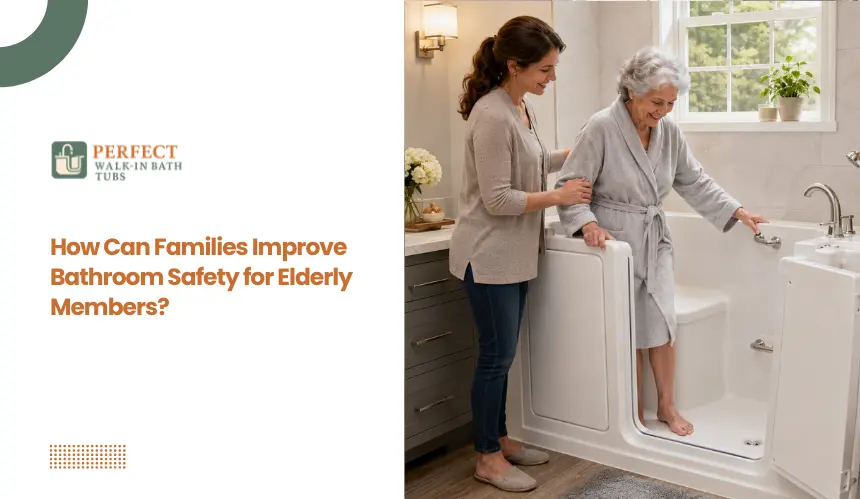
Walk-in tubs also include features such as built-in seating, grab bars, and sealed-entry systems that improve stability during bathing and reduce physical strain.
Did you know?
Many bathroom injuries occur while entering or exiting traditional bathtubs rather than during bathing itself.
How Do Low-Threshold Entries Improve Accessibility?
Low-threshold entries reduce the need for high-stepping movements, which become more difficult as mobility changes with age. Lower entry points allow elderly individuals to move more naturally and with less physical effort.
This design also helps reduce instability caused by standing on one foot while stepping over a raised edge.
Warning:
High-step tub entries can become dangerous when balance, joint flexibility, or leg strength declines.
Why Are Handheld Showerheads Easier and Safer to Use?
Handheld showerheads improve bathing control by allowing water direction to be adjusted without requiring excessive reaching, twisting, or repositioning. This helps elderly individuals remain in safer, more stable positions during bathing.
They also support seated bathing by making it easier to rinse while remaining securely positioned.
Important insight: A safer bathing design is most effective when it reduces unnecessary movement and allows elderly individuals to maintain stable positioning throughout the bathing process.
How Does Lighting Affect Bathroom Safety?

Lighting plays a critical role in bathroom safety because visibility directly affects balance, depth perception, and movement accuracy. Poor lighting makes it harder for older adults to detect water on the floor, identify obstacles, or judge distances accurately, increasing the likelihood of slips and falls.
Why Is Poor Visibility a Major Fall Risk?
Age-related vision changes can reduce contrast sensitivity and depth perception, making dimly lit bathrooms more hazardous. Shadows, glare, and uneven lighting can make surfaces appear unstable or difficult to navigate safely.
Limited visibility becomes especially dangerous during nighttime bathroom use, when individuals transition from dark environments into confined spaces.
Did you know?
Reduced visibility significantly increases fall risk because the body relies heavily on visual cues to maintain balance during movement.
How Can Motion-Sensor and Night Lighting Help?
Motion-sensor lighting improves safety by automatically illuminating the bathroom when movement is detected. This reduces the need to search for switches in dark conditions and provides immediate visibility during nighttime use.
Night lighting also helps maintain orientation and improves pathway visibility without creating harsh glare that may affect vision adjustment.
Warning:
Many nighttime bathroom falls occur because elderly individuals move through poorly lit areas before their vision fully adjusts.
Why Should Light Switches and Controls Be Easily Accessible?
Light controls should be positioned where they can be reached easily without stretching, twisting, or walking through dark areas. Accessibility reduces unnecessary movement and helps elderly individuals maintain stable positioning while activating lighting.
Proper placement also supports safer entry and exit from the bathroom during low-visibility conditions.
Important insight:
Bathroom lighting is not only about brightness but also about creating consistent visibility that supports safer movement, orientation, and balance at all times of day.
How Can Bathroom Layout and Accessibility Be Improved?
Bathroom layout and accessibility directly affect how safely elderly individuals can move within the space. Tight pathways, poorly positioned fixtures, and unnecessary obstacles increase the likelihood of unstable movement, especially in areas where quick balance recovery is limited.
Why Should Clutter and Obstacles Be Removed?
Cluttered bathrooms reduce available space for movement and create tripping hazards. Items such as loose rugs, storage baskets, cords, or misplaced accessories can obstruct walking paths and interfere with safe movement transitions.
Removing unnecessary obstacles helps create a clean and predictable environment where movement can occur without sudden interruptions or balance adjustments.
Did you know?
Even small floor-level obstacles can become major fall risks when balance, vision, or reaction time declines.
How Does Wider Movement Space Improve Safety?
Wider movement areas allow elderly individuals to turn, reposition, and use mobility aids more safely. Additional space also improves balance recovery by reducing the risk of colliding with nearby fixtures or walls.
Bathrooms with restricted movement areas often force awkward body positioning, especially during bathing or toilet transfers.
Warning:
Confined layouts increase injury severity because there is less space to recover from slips or unstable movement.
Why Is Proper Fixture Placement Important for Accessibility?
Fixtures such as toilets, sinks, grab bars, and storage areas should be positioned so they can be reached without excessive bending, twisting, or stretching. Proper placement supports natural movement and reduces physical strain during routine use.
Accessibility-focused layouts also improve efficiency by keeping support features within immediate reach when stability is needed.
Important insight:
Bathroom accessibility is most effective when the entire space supports smooth, predictable movement rather than relying on isolated safety features alone.
How Can Families Improve Toilet Area Safety?
The toilet area is a common location for bathroom falls because sitting down and standing up require balance, leg strength, and controlled movement. Elderly individuals often experience instability during these transitions, especially when support is limited or the surface is slippery.
Why Are Raised Toilet Seats Helpful?
Raised toilet seats reduce the distance required to sit down and stand up, which decreases strain on the knees, hips, and lower body. This makes transfers easier for individuals with reduced mobility or joint stiffness.
By minimizing the effort required for lowering and lifting, raised seats improve stability and reduce the risk of losing balance during movement transitions.
Did you know?
Lower toilet heights can increase physical strain significantly for elderly individuals with mobility limitations or reduced leg strength.
How Do Support Rails Improve Stability During Transfers?
Support rails provide stable handholds that assist with controlled sitting and standing movements. They help distribute body weight more evenly and reduce dependence on unstable surfaces such as towel bars or countertops.
Properly positioned rails also allow elderly individuals to maintain balance throughout the transfer process.
Warning:
Using unsecured surfaces for support can increase fall risk if those fixtures are not designed to bear body weight.
Why Is Floor Grip Important Around Toilet Areas?
Moisture around toilet areas can reduce traction and create slippery conditions, especially on smooth tile flooring. Improving floor grip helps stabilize foot placement during transfers and movement.
Slip-resistant flooring and stable surface materials reduce unexpected foot movement and support safer standing and turning motions.
Important insight:
Many toilet-area falls occur during transition movements rather than while standing still, which is why stability and traction are critical in this part of the bathroom.
How Do Healthcare Professionals Evaluate Bathroom Safety Risks?
Healthcare professionals evaluate bathroom safety by analyzing how elderly individuals move within the space and identifying conditions that increase the risk of falls or injuries. The focus is not only on visible hazards, but also on how mobility, balance, strength, and environmental design interact during daily bathroom use.
What Role Does Occupational Therapy Play in Bathroom Safety?
Occupational Therapy focuses on helping individuals perform everyday activities more safely and independently. Occupational therapists evaluate movement patterns, transfer ability, reach zones, and stability during bathroom use.
They often recommend environmental modifications such as grab bars, seating systems, safer bathing layouts, and accessibility adjustments that match the individual’s mobility needs.
Did you know?
Occupational therapy assessments frequently identify risks that families may overlook because those hazards develop gradually over time.
How Do Home Safety Assessments Identify Hidden Hazards?
Home safety assessments examine factors such as lighting, flooring traction, fixture placement, movement pathways, and accessibility limitations. These evaluations help identify hazards that may not appear dangerous during normal daily use.
Assessments also consider how physical limitations interact with environmental conditions, particularly in wet or confined spaces such as bathrooms.
Warning:
Many bathroom hazards remain unnoticed until a fall or near-accident reveals how unsafe the environment has become.
Why Is Preventive Modification Recommended Before Falls Occur?
Healthcare professionals strongly recommend preventive modifications because waiting until after an injury often increases both physical and emotional consequences. Early safety improvements help maintain confidence, mobility, and independence before movement becomes severely limited.
Preventive changes also allow elderly individuals to adapt gradually to safer environments rather than making urgent adjustments after a medical event.
Important insight:
Bathroom safety evaluations focus on reducing future risk, not just correcting current problems, which is why prevention is considered more effective than reactive modification.
What Bathroom Safety Mistakes Should Families Avoid?
Some bathroom safety efforts unintentionally create new risks by relying on unstable equipment, poor placement, or temporary fixes not designed for long-term support. Avoiding these mistakes is just as important as adding safety features.
Why Are Temporary Solutions Sometimes Unsafe?
Temporary solutions such as suction-mounted grab handles, unstable stools, or unsecured bath accessories may appear helpful but often lack the strength and reliability needed to support body weight safely.
These products can shift, detach, or move unexpectedly during transfers or slips, especially in wet conditions.
Did you know?
Support devices that are not securely anchored can fail under sudden body pressure, increasing fall risk instead of reducing it.
How Can Improper Grab Bar Installation Create Risk?
Grab bars must be anchored correctly into structural support areas to function safely. Poorly installed bars may loosen over time or fail when force is applied during movement or balance recovery.
Placement is also critical. Bars positioned too high, too low, or too far from transfer points reduce their effectiveness and may force awkward movement patterns.
Warning:
A grab bar is only effective if it can safely support full body weight during unexpected instability.
Why Should Slippery Rugs and Loose Mats Be Removed?
Loose rugs and unsecured bath mats can slide unexpectedly when stepped on, especially on smooth, moisture-exposed flooring. Elderly individuals may not react quickly enough to recover balance once movement begins.
Replacing loose materials with slip-resistant alternatives improves traction and creates more stable walking conditions.
Important insight:
Many bathroom accidents are caused by small environmental hazards that seem harmless until balance, mobility, or reaction time becomes limited.
Frequently Asked Questions
What are the most important bathroom safety features for elderly people?
The most important features include grab bars, non-slip flooring, proper lighting, raised toilet seats, shower seating, and safer bathing access, such as walk-in showers or walk-in tubs. These features improve stability and reduce the risk of falls during daily bathroom use.
How can families reduce bathroom fall risks for seniors?
Families can reduce fall risks by improving traction, removing obstacles, increasing visibility, and adding support systems in high-risk areas such as showers, bathtubs, and toilet spaces. Preventive modifications are more effective than waiting until after a fall occurs.
Are walk-in tubs safer for elderly individuals?
Walk-in tubs are generally safer because they reduce the need to step over high tub walls and often include built-in seating, grab bars, and low-entry access. These features help improve stability and reduce the risk of movement-related falls.
Why are grab bars important in bathrooms?
Grab bars provide stable support during sitting, standing, turning, and bathing movements. They help elderly individuals maintain balance and regain stability if they slip or become unstable on wet surfaces.
Which lighting improvements improve safety in elderly bathrooms?
Bright, evenly distributed lighting, motion-sensor lights, and nighttime pathway lighting improve visibility and reduce fall risk. Proper lighting helps elderly individuals more clearly identify obstacles, water hazards, and pathways of movement.
When should bathroom safety modifications be considered?
Bathroom modifications should be considered as soon as mobility, balance, or strength changes begin to affect movement safety. Early modifications help prevent injuries and support long-term independence before risks become severe.